
The Enquiry Gap: What Really Happens to Every Lead Your Development Generates
The Enquiry Gap: What Really Happens to Every Lead Your Development Generates
Every development marketing budget has two sides. There's the side everyone talks about — portals, digital campaigns, show days, billboards, Facebook ads — and there's the side almost no one talks about: what happens the moment that enquiry arrives.
The uncomfortable truth is that most South African property developments are extraordinarily good at spending money to generate leads, and extraordinarily bad at what happens next.
This is the enquiry gap. And it's costing developments far more than they realise.
What Is the Enquiry Gap?
The enquiry gap is the invisible space between the moment a prospective buyer raises their hand and the moment they receive a response that actually moves them forward.
It's not a marketing problem. It's a systems problem.
It exists because most developments are built around campaigns, not infrastructure. A portal listing fires. A Facebook ad converts. A show day pulls a crowd. Enquiries flood in. And then — in many cases — those enquiries fall into a spreadsheet, a shared WhatsApp group, an agent's personal inbox, or worse, nowhere at all.
The buyer has already moved on before a meaningful conversation begins.
Here's what developers are missing: in 2026 and beyond, the buyer journey moves faster than any manual process can match. The window between interest and disengagement is narrow. The buyer who enquired about your development on a Tuesday evening has compared three competing projects by Wednesday morning. If your first response arrived on Thursday, you didn't just miss a follow-up — you missed the buyer entirely.
The Anatomy of a Leaking Lead Flow
Most developments don't have a lead problem. They have a lead management problem.
To understand the enquiry gap, it helps to map exactly where leads are lost. In most developments, the leakage happens at one or more of these points:
1. The First Response Window
Studies consistently show that response time is one of the strongest predictors of lead conversion. The difference between responding in under five minutes versus responding in an hour can reduce conversion rates by more than 80%. Most development sales teams — however talented — cannot manually respond to every inbound enquiry within five minutes, especially outside office hours.
2. The Qualification Vacuum
When a lead does receive a response, it's often a generic reply. No qualification. No journey trigger. No next step. The buyer gets a brochure PDF and a "feel free to call us." That's not a buyer journey. That's a pamphlet delivery.
3. The Follow-Up Collapse
Ask any development director what happens after the first reply and the answer is often uncomfortable. Follow-up depends on individual agents. It's inconsistent. It's undocumented. It's unmeasured. Some leads receive excellent attention. Many receive nothing after day three.
4. The CRM Black Hole
In developments where a CRM exists, it's often incomplete. Contacts are imported but not engaged. Pipelines exist but aren't maintained. The CRM becomes a storage system rather than a conversion engine.
5. The Long-Game Abandonment
Property decisions take time. A buyer who enquires today may purchase in six to eighteen months. Without an automated long-term nurture system, that buyer is forgotten within weeks. When they're finally ready to buy, they're buying from a development that stayed in front of them — not yours.
Why This Happens: The Campaign Mindset
Most development marketing is still built around the launch campaign as the primary event. Every resource — budget, attention, team energy — is concentrated around a single spike in activity. The launch period is managed intensively. Then it fades.
This mindset treats marketing as an event rather than a system. And events end.
The campaigns end. The portal spend drops. The show days become monthly, then quarterly. But the buyers are still out there. The enquiries are still coming in — just not at launch intensity. And the infrastructure to handle them was never really built.
This is where systems outperform campaigns. A campaign delivers a burst. A system delivers compounding results — every week, every month, every phase.
What a Development Growth System Changes
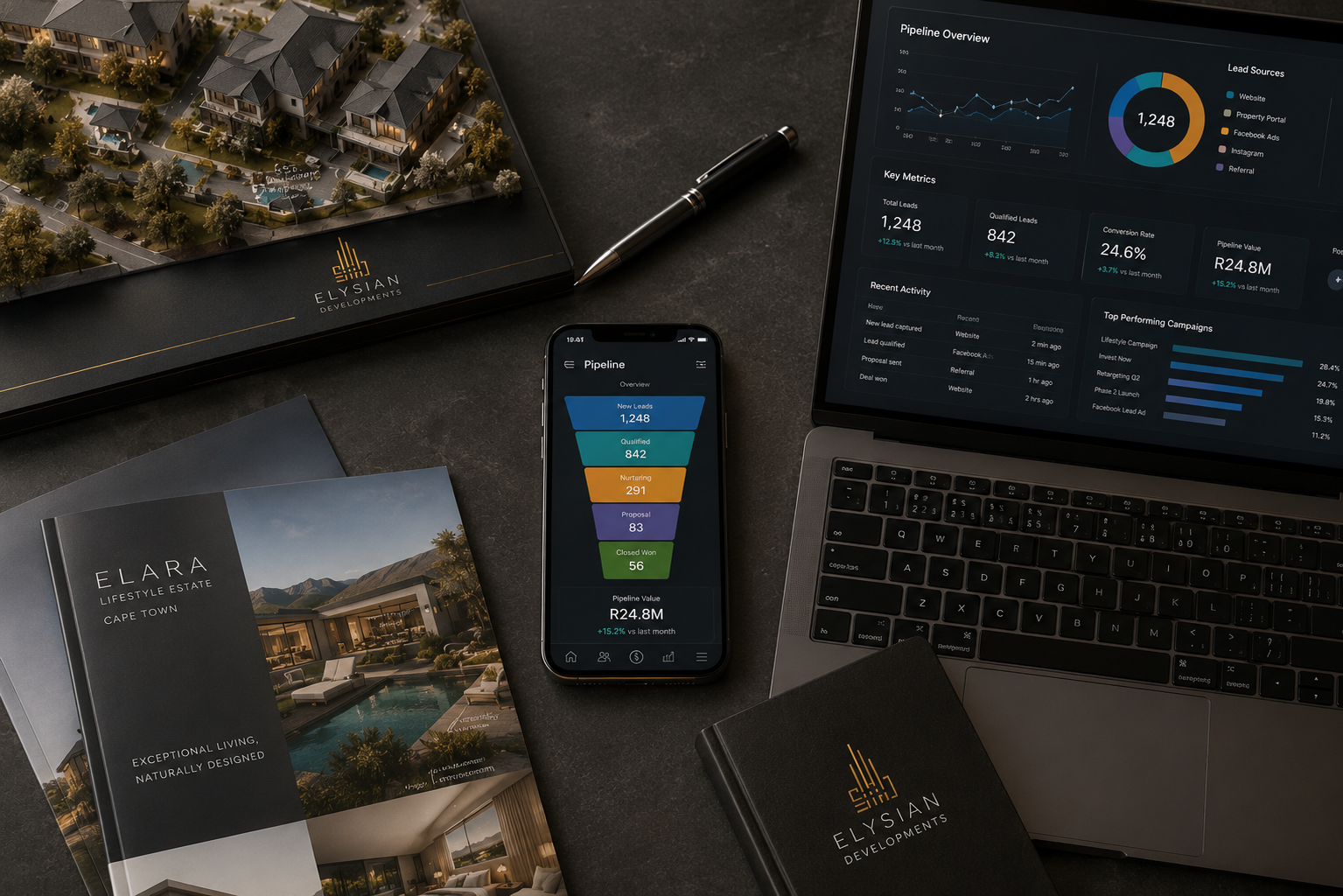
Development Funnels is built specifically to close the enquiry gap. Not through better marketing. Through better infrastructure.
A development growth system operates at every stage of the buyer journey — from the first click to the signed agreement — without requiring manual intervention at every touchpoint.
Here's what that looks like in practice:
Instant Automated Response
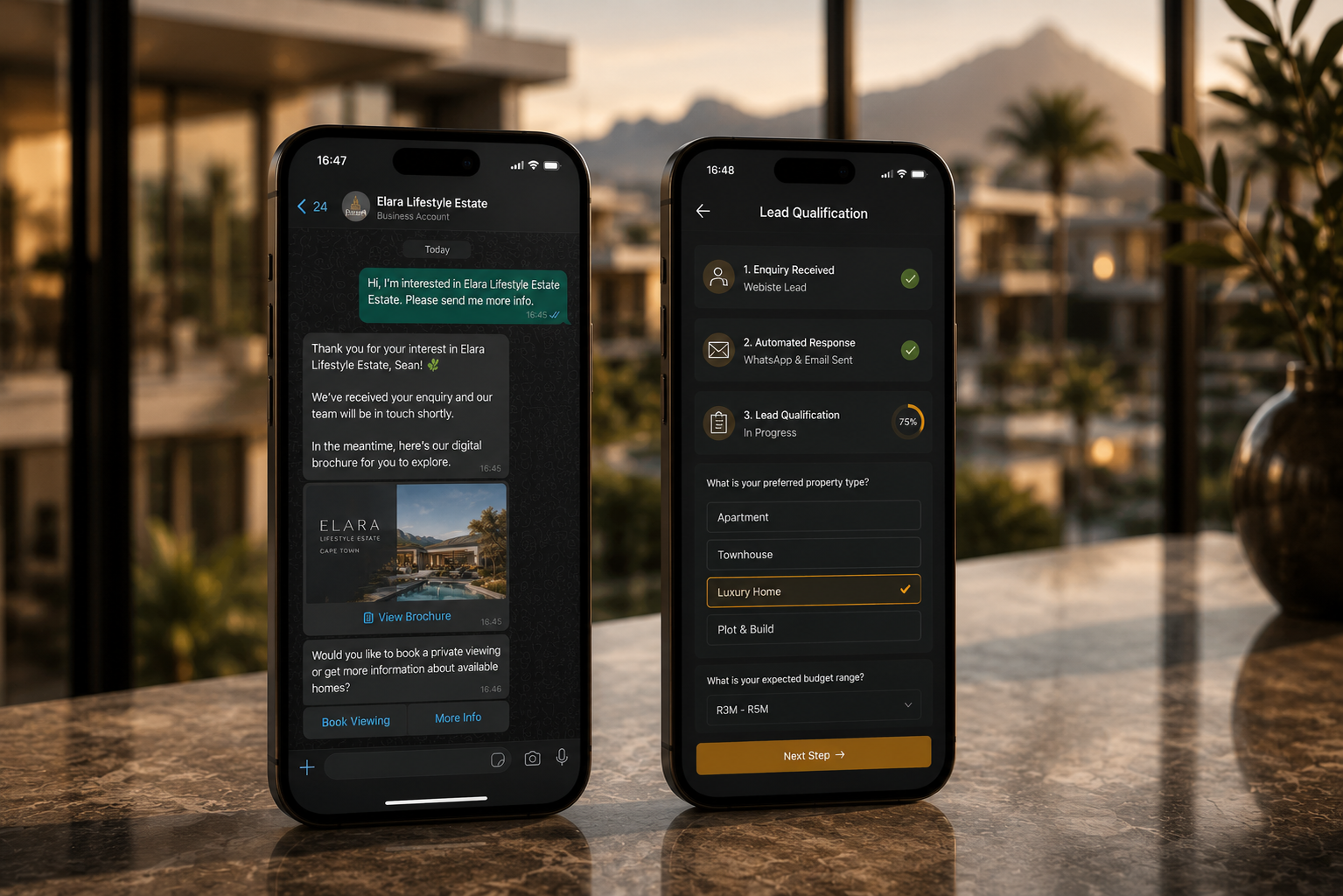
The moment an enquiry arrives — from a portal, a website form, a Facebook lead ad, or a WhatsApp message — the system responds. Within seconds. With a personalised message. At 11pm on a Sunday. The buyer feels seen. The conversation begins.
Intelligent Qualification
The initial response isn't generic. It starts a qualifying sequence — budget range, timeline, preferred unit type, whether they're cash or bond. This data flows directly into the development CRM, building a rich buyer profile before a single agent has typed a word.
Automated Buyer Journey
From the moment of qualification, the buyer enters a structured journey. Email sequences. WhatsApp follow-ups. Milestone messages. Phase updates. Content that educates, builds confidence, and keeps the development top of mind. All automated. All trackable.
Pipeline Visibility

Sales directors and development managers can see exactly where every enquiry sits at any point in time. Which leads are warm. Which are cold. Which need a human touch. Which have been stale for 14 days and need re-engagement. The pipeline is not a black box. It's a live dashboard.
Long-Term Nurture
For buyers who aren't ready now, the system doesn't abandon them. It nurtures them. Monthly insights. Development updates. Market context. Progress photography. The buyer stays connected to the development without requiring ongoing manual effort from the sales team.
WhatsApp: The Channel South African Developers Underestimate
South Africa has one of the highest WhatsApp adoption rates in the world. It's the primary communication channel for millions of South Africans across all income segments — from affordable housing buyers to luxury estate purchasers.
Most developments are not using WhatsApp strategically. They're using it reactively. An agent replies when they have time. A project updates group gets created and forgotten.
A development growth system deploys WhatsApp as a structured, automated communication channel. Enquiries that arrive via WhatsApp receive an immediate automated response. Buyers in the nurture journey receive timely WhatsApp messages at strategic touchpoints. Agents receive internal notifications when a lead reaches a critical stage.
This is not about spamming buyers. It's about showing up in the channel they actually use, at the moment it matters.
What Good Development Lead Management Looks Like in 2026 and beyond
To be concrete about the difference, here's a side-by-side comparison of a traditional development response system versus a development growth system:
Traditional Approach:
Lead arrives via portal
Email notification goes to shared inbox
Agent picks it up the next morning
Generic email reply with PDF brochure
One follow-up call attempt
If no answer, lead is marked as cold
No further contact
Development Growth System:
Lead arrives via portal
Automated WhatsApp message sent within 60 seconds
Automated qualification sequence initiated
Buyer profile built in CRM
Agent notified with full buyer context
Automated email sequence begins (7-day, 30-day, 90-day)
Long-term WhatsApp nurture activated
Pipeline updated in real time
Sales director views full funnel performance daily
The difference is not incremental. It's structural.
A Practical Example: The Estate That Stopped Starting From Scratch
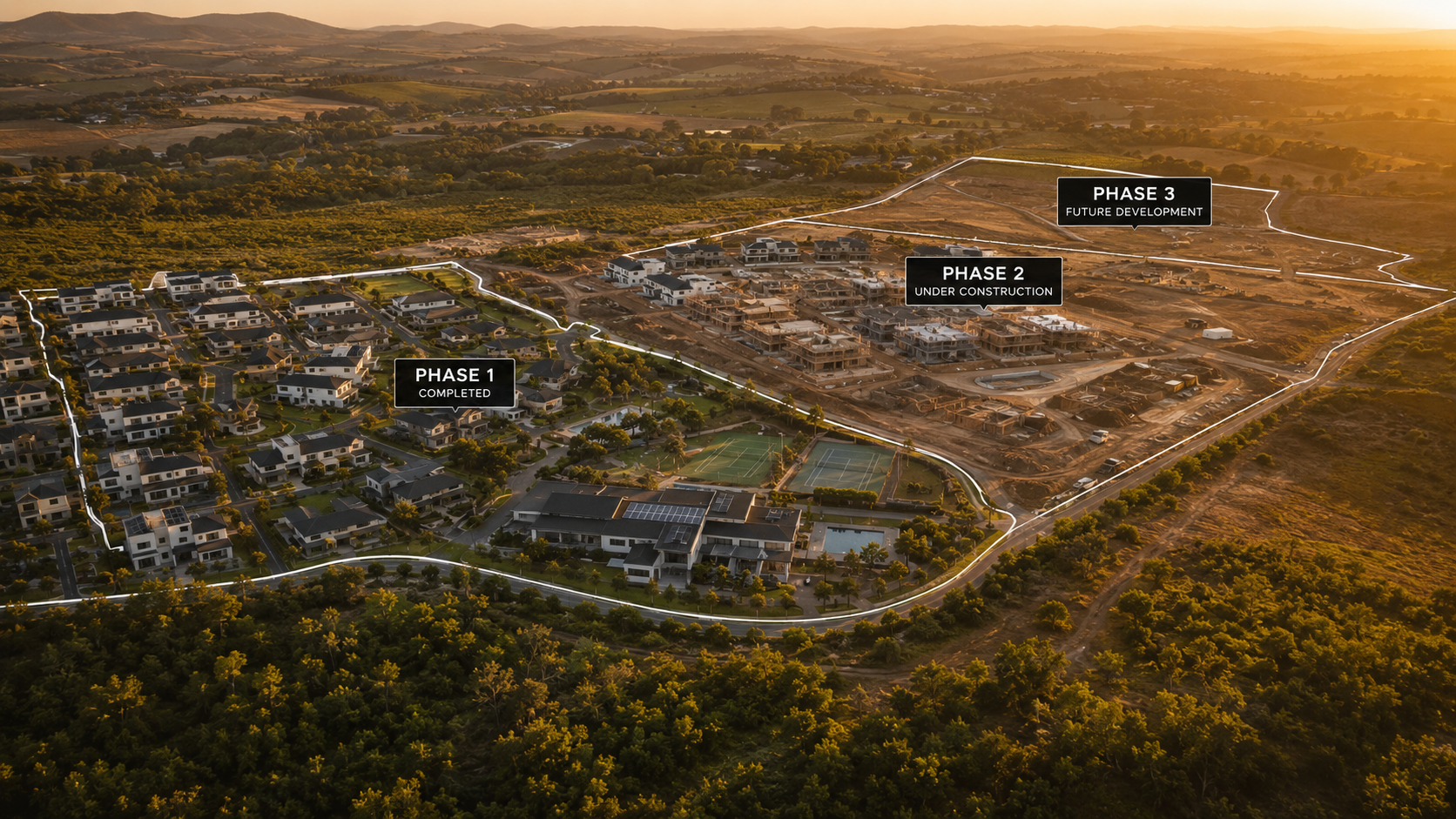
Consider a lifestyle estate development in the Western Cape managing its third phase. Phases one and two had been successful — but each phase was treated as a fresh start. The database from phase one wasn't structured. The enquiries from phase two were spread across agent inboxes. When phase three launched, they were effectively starting over.
With a development growth system in place from phase three, every enquiry was captured, qualified, and tagged by phase interest, budget, and timeline. Buyers who weren't ready for phase three but expressed interest in future phases were automatically tagged and entered into a long-term nurture sequence.
When phase four launched, they didn't start from scratch. They activated a warm database of over 1,200 prospects who had already raised their hand, been nurtured, and were genuinely ready to engage.
Future phases become easier when your systems compound what your campaigns started.
The Developer Questions Worth Asking
If you're reading this and recognising patterns in your own development, these are the questions worth putting to your team this week:
What is our average response time to a new enquiry? If you don't know this number, that's part of the problem.
What happens to a buyer who enquires at 9pm on a Saturday? Is there a system, or do they wait until Monday?
How many leads from our last campaign are still being nurtured today? If the answer is few or none, you've lost the long game.
What does our CRM pipeline actually look like? Is it current, complete, and actionable — or is it a mess of imported contacts that nobody trusts?
When our next phase launches, will we be activating a database — or rebuilding from zero?
These questions have answers. But they require systems to answer them well.
Launches End. Systems Compound.
The developments winning in 2026 and beyond understand something that many of their competitors are still learning: the value of a lead is not determined by the quality of the campaign that generated it. It's determined by the quality of the system that receives it.
The enquiry gap is real. It exists in developments of every size, every segment, and every price point. It is not solved by hiring more agents. It is not solved by spending more on portals. It is solved by building infrastructure that closes the gap automatically — at scale, consistently, and at every hour of the day.
Marketing creates the opportunity. Systems convert it.
Launches end. Systems compound.
Ready to Close the Enquiry Gap in Your Development?
If any part of this article reflected what's happening in your development — or what you're worried might be happening — it's worth a conversation.
Development Funnels is a development growth system built specifically for South African property developments. We help development teams build the infrastructure to capture, qualify, nurture, and convert buyers — consistently, at scale, and across every phase.
Book a Strategy Consultation → developmentfunnels.co.za
Also explore: propertyfunnels.club


